Dear book travelers,
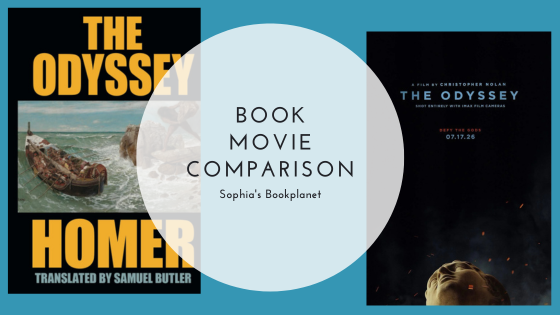
I decided to write today’s post in English, as my thinking process on my recently listened to audio book as much as its adaption into a movie have been predominantly happening in English, too. Before going on vacation, I was super excited to watch Christopher Nolan’s newest release, The Odyssey, once I return from my journey (pun intended). To feel somewhat prepared for this adventure, my boyfriend and I decided to listen to the audio book together while road tripping. Eventually, I continued and finished the book at home because it dragged along quite a bit and even bored me for some parts on the road. Nonetheless, I was still very excited to see Odysseus’ adventures come alive on the screen.
 Well-Chosen and Well-Known Cast
Even before knowing more about the Odyssey (besides some individual stops on our “hero’s” journey), the movie intrigued me by the extraordinary assemblage of actors and actresses who would appear in it. From Matt Damon, Tom Holland, and Anne Hathaway to Lupita Nyong’o, Charlize Theron, Zendaya, and Robert Pattinson—to just name a few. And their acting has certainly been great and convincing, which I cannot say as much about the script itself or the story as it was adapted or originally written down.
The book
The Odyssey is a classic that is partly even taught in schools, if in English or Old Greek or something else. The story has been adapted several times in diverse medium and explored in retellings over and over again. Interestingly enough, the book market seemed more interested in side characters over the last decades than the renown hero himself. I for my part found a lot of interesting new perspectives in Madeline Millers Circe, which more deeply explores this character dismissed and flat in both movie and book. What might actually have made this book so interesting for Nolan to adapt is that there are no women with depth in the original, so he apparently didn’t feel the urge to explore them more in his adaptation. On the other side, Odysseus gets praised and admired and even proposed to repeatedly throughout the story although we as modern readers (and hopefully listeners in the old days) can see how horrible of a character he is.
Female characters
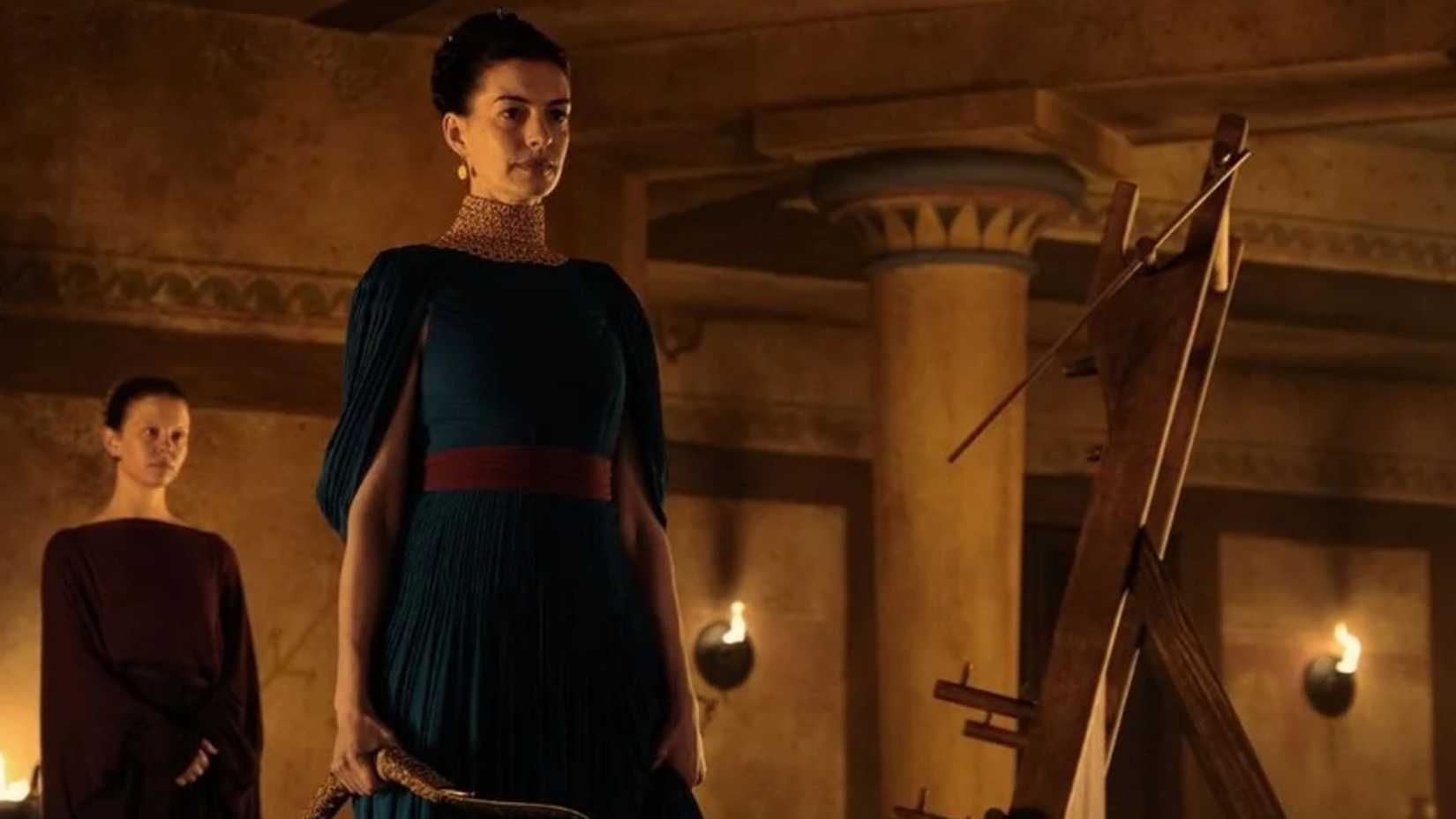
I get the intrigue for actresses to play in a Christopher Nolan—despite the fact that his women characters are always flat and barely have things to say. That was unfortunately also the case for this movie. Circe, who is already a rather flat and easy to convince character in the original story (although she has a lot of depth according to other sources), becomes even less convincing in her acting, giving in to Odysseus’ ask within minutes and helping him on his way without any explained motivation. Helen at least gets a bit of depth to her, expressing spite about being back with Menelaos, but then surprisingly also for her sister, who took revenge on her husband for sacrificing their daughter. I would have liked some more consistency and explanation in her anger. She at least got me with regretting the war that was fought in her name.
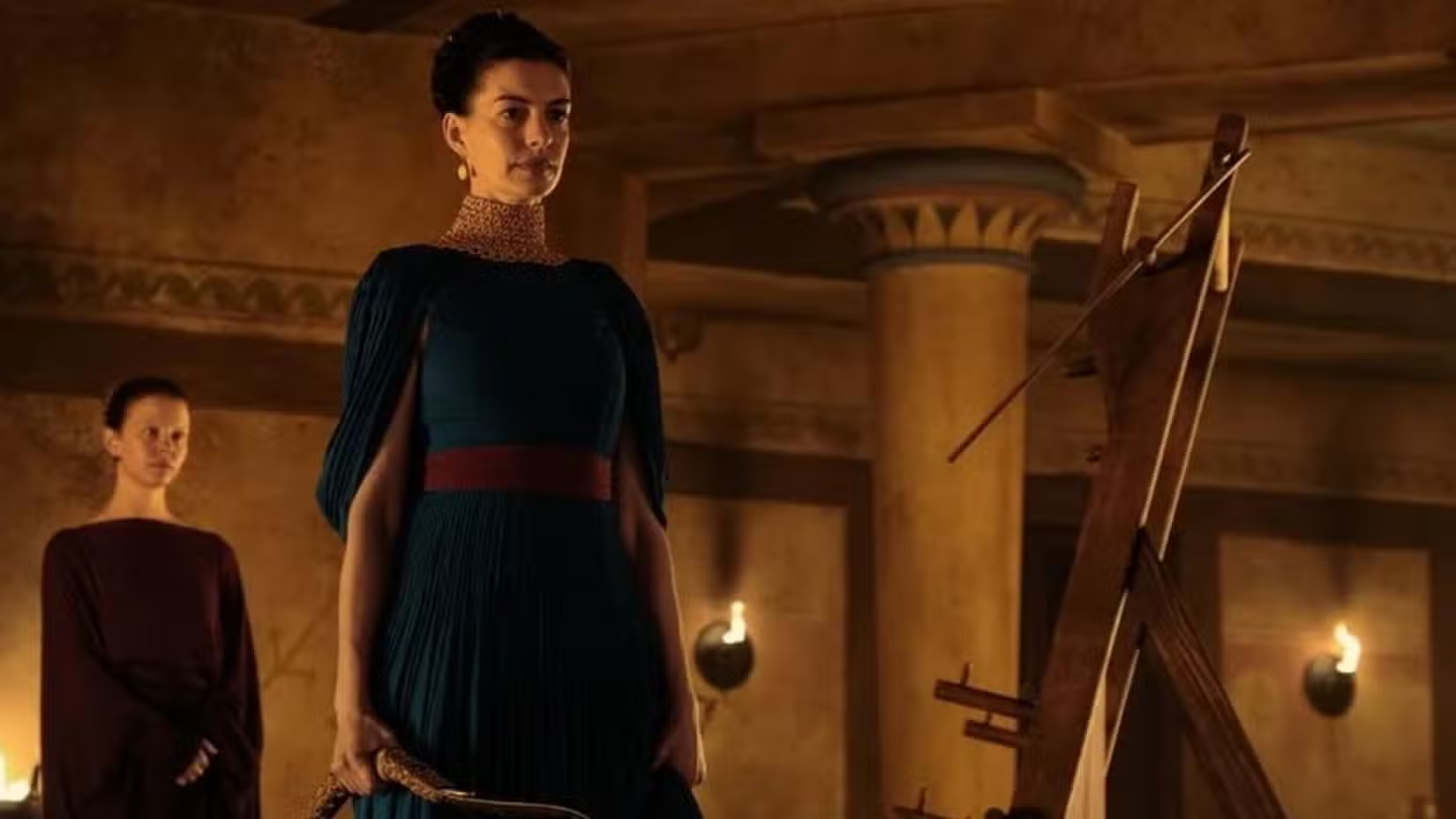
Penelope is a mixture of a frustrated hag and a caring mother that never really landed anywhere for me. She is clever in some regards but ruined that impression in other moments. Calypso is utilized as a listener to Odysseus’ story so we could follow it along, and cared for him while he was recovering a bit from his trauma. Despite that, she doesn’t have any own motivation or depth. The most interesting portrayal and role is the one of Zendaya, who I took as Athena for most of the movie. Some final scenes evoke the idea that she is not the goddess but a representation of Odysseus’ trauma and regrets, which I find way more intriguing. That would also align with the fact that Nolan’s movie omits all other moments in which the book persists on the gods’ doing, like Athena’s disguise as other characters, which here solely appear as humans. I like the ambiguity that is evoked through this. Nolan’s version brings all actions down to human doing and only allows them to believe into gods to reason their own doing, instead of actually showing us any proof of the gods’ intervention.
Anticlimactic and too much Action
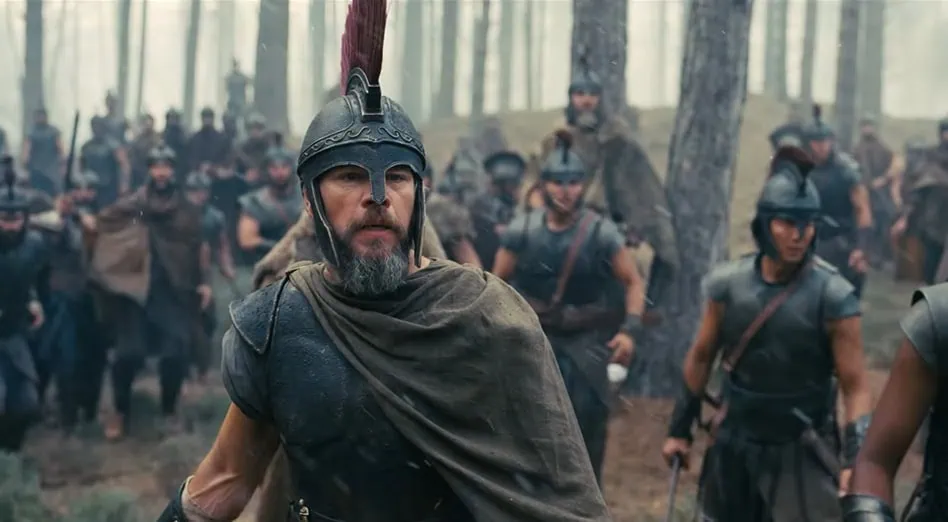
Some parts and side plots of the book where completely cut from the script, which I do not find too drastic. Other scenes were reshaped quite a bit, but without any bit change of narrative focus or moral. Instead I would even say that the armor of the Laestrygonians makes their appearance ridiculous. Why would giants on a deserted island wear armor, if they already have a natural advantage over everyone coming there? Was it to distinguish them from the prior appearance of Polyphemus, who was completely naked? Make it make sense to me please!
On Polyphemus himself: I love how they brought him to live through puppetry rather than CGI, but the lack of conversation (according to the book) felt a bit shallow and maybe even somewhat racist from Odysseus’ crew who are astonihed when he does finally talk. That scene simply doesn’t give me anything but eventually showing me again that Odysseus is an asshole. On top of that, I am also wondering why Agamemnon was turned into an almost supernatural being of whom we never see the face.
Regrets and the Law of Zeus
The only influence the gods actually had in this version (despite storms, because they could simply have been storms), is the more or less consistent belief that they will punish who mistreats strangers or is a bad host or guest. Odysseus eventually reflects himself on having been a bad guest and taken more than he was given instead of choosing conversation with people over violence. After this emotional insight, he nonetheless goes on to kill half of his men as they have missbehaved as guests. His trauma brings him some new perspective but never really changes him. This is just one of the many inconsistencies of the book (the one that I also realized in the movie). On a better note, I did like his reunion with some loyal friends like his dog, Mentor, or one of the maids. In comparison to the book, the movie could convey more emotions through the actors’ amazing facial expressions and heartfelt performances.
Cinematography and Music
Performances themselves are of course only half of the cake. The amazing sets and chosen settings are the cream frosting on the cake, while the music by Ludwig Goransson made us stick to our seats and captivated by the happenings for hours like salt that brings out the sweetness of your treat even better. I generally thought there was a bit too much violence and action when the focus should have lied more on the emotionality of the journey. On top of that, some scenes with stroboscopic lightning was almost painful to watch. The heavy sound surely made us feel part of Odysseus’ experience but also keeps me from watching the movie again too soon.
In conclusion,
As expected by Christopher Nolan, he adapted an well-known story into an epic masterpice and chose fantastic actors to convey th characters’ emotional journey. I was disappointed by this modern adaptation not allowing the women characters to have more depth as much as by inconsistencies carried over from the original story or even developed solely in this movie. I further enjoyed the book for its poetry and for all the works of literature it offered a basis for.